01
Rebuilding the jaws
Discuss the bone and soft-tissue defect, the reconstructive options, and the goals of rehabilitation.
Super specialist · Oral oncology & microvascular reconstruction · Kolkata
Hindi · English · Bengali+91 89448 18464
Reconstructive planning for the upper or lower jaw after tissue loss, with attention to oral function and facial support.

Maxillary–Mandibular Reconstruction
Reconstructive planning for the upper or lower jaw after tissue loss, with attention to oral function and facial support.
01
Discuss the bone and soft-tissue defect, the reconstructive options, and the goals of rehabilitation.
02
The consultation brings together your examination, medical history, and any existing reports. Further investigations are discussed according to the findings.
03
Discuss the proposed treatment, alternatives, recovery, and follow-up with Dr. Saha. The plan is individual to your diagnosis and care needs.
About Maxillary–Mandibular Reconstruction
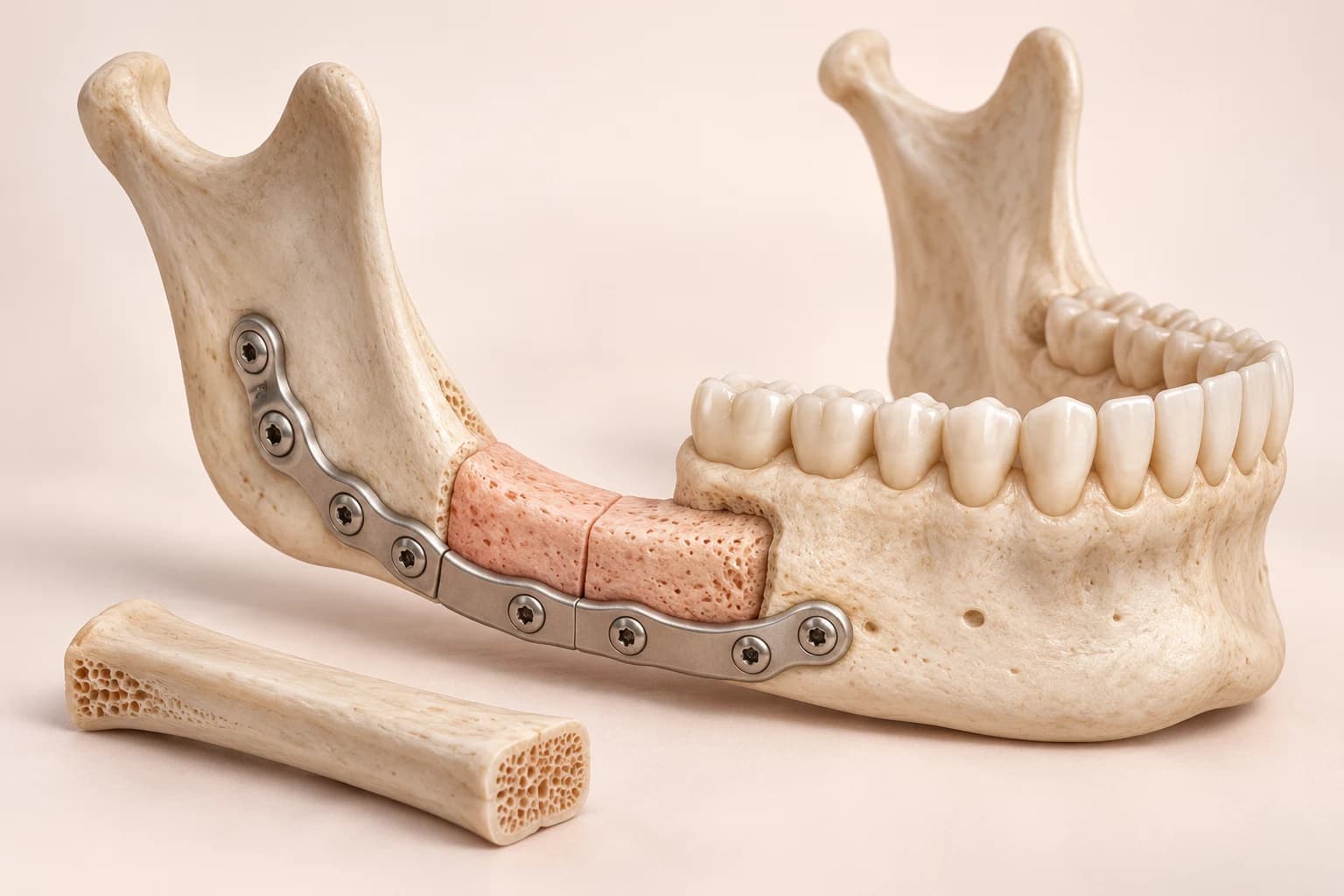
When part of the upper or lower jaw is lost to cancer, injury, or infection, the gap affects chewing, speech, and the shape of the face. Microvascular reconstruction transfers bone — often from the lower leg (fibula) — together with its blood supply, which is reconnected to vessels in the neck under a microscope.
Because the transferred bone stays alive, it heals into the jaw and can later support dental implants. CT scans are used to plan the shape of the new bone so it matches the original jaw as closely as possible.
Related care

Reconstruction after loss of tongue tissue, with speech, swallowing, and rehabilitation considered in the surgical plan.
Explore care

Reconstruction of cheek defects after surgery or injury, with attention to lining, soft-tissue coverage, and facial form.
Explore care
Maxillary–Mandibular Reconstruction
Call, or send a request with what you have noticed. Family members are welcome in the room.